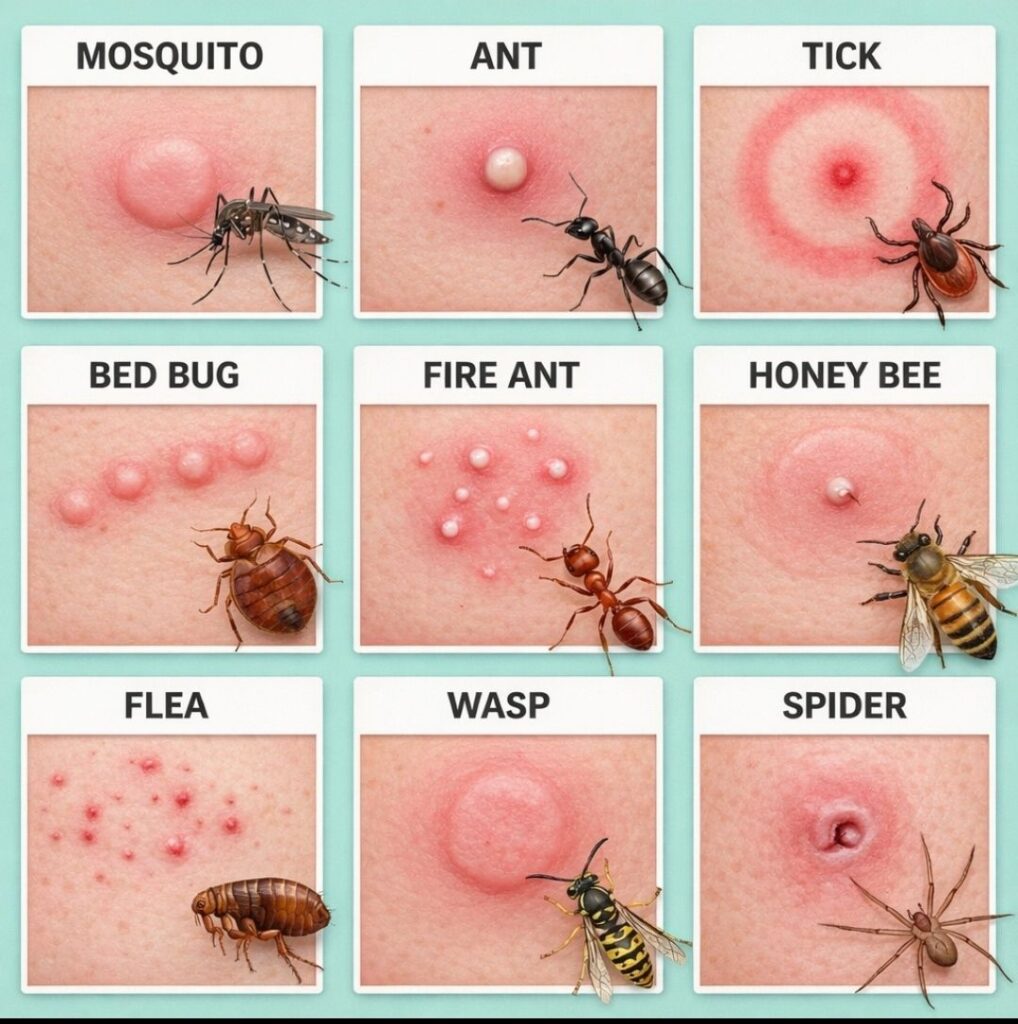
Mosquito: single raised bump that itches a lot and usually shows up within minutes. In most cases no treatment is required other than using an antihistamine cream to reduce the itching.
Ant: a white pustule in the center with redness around it that may cause a burning sensation for a few days. Clean the area and avoid popping the blister because breaking it can increase the risk of infection.
Tick: a red circular rash that slowly spreads and forms a bullseye pattern. If you notice this around a tick bite, see a doctor as soon as possible even if you feel well. Lyme disease is much easier to treat when detected early. If a tick is attached, remove it using fine-tipped tweezers, grasping it close to the skin and pulling upward steadily without twisting.
Bed bug: bites often appear in a line or small cluster, usually on areas covered by clothing and often noticed in the morning. They are itchy but generally not dangerous. This pattern usually suggests a bed bug infestation rather than an outdoor bite.
Fire ant: several white pustules appear within a few hours of the sting and are surrounded by redness. The sting causes an immediate strong burning sensation. Do not break the pustules. People who are allergic should carry an epinephrine auto-injector.
Honey bee: a swollen bump with a small white center where the stinger may remain in the skin. Remove the stinger by gently scraping it sideways with a card or fingernail. Avoid squeezing it because that can release more venom.
Flea: many small itchy bumps often found around the ankles and lower legs. This pattern usually indicates repeated bites from fleas living in carpets, pet bedding, or furniture.
Spider: a bite that may show a small depressed center with redness around it. Monitor the area for several hours. If it grows larger, becomes darker, or forms a blister with a dark center, seek medical care since it could indicate a brown recluse bite.
Wasp: a raised painful bump without a stinger left behind. The pain is often stronger than a bee sting, and wasps such as yellow jackets can sting multiple times.
If you develop trouble breathing, swelling in the face or throat, or dizziness after any bite or sting, seek emergency medical help immediately. These symptoms may indicate anaphylaxis and require urgent treatment.
This information is provided for general awareness only. If you are unsure about a bite or your symptoms worry you, consult a healthcare professional.